Monday, 14 January 2019

Narrative Film Screening 3

The first film we watched today was called 'Shave It' which is a 3D animation. It is about a Monkey whose home is destroyed by humans, so he shaves off his fur and disguises himself as a human. He then learns hows to make a machine that will bulldoze down buildings and replace them with the jungle, recreating his home with human technology.


Next we watched a French film called 'Delicatessen', which involved a hotel above a Butchers. There are food shortages and the Butcher kills off the new residents and then hands out their body (meat) to other residents of the hotel, who are all in on his devious and horrific scheme. The Butchers daughter fall in love with the new victim and this film shows how they escape and put an end to the killing.

This film uses some great camera angles, for example in one scene the camera takes us through the pipes of the hotel (I have added red circles and arrows to show what I want you to look at:


Overall the colours throughout this film are quite dull(shown in the top two images below), however they grow brighter at the end, when the two lovers survive and live happily together(shown in the lower image below):




Friday, 11 January 2019

Final 'Escape C(l)an' Animatic

Here is my final Animatic for The Escape C(l)an in preparation for my pitch on Monday 21st January:


Final Foley added to Animated Scene

Foley/Sound Effects I created, added to an Animated Scene from WALL-E (Scene created by Pixar Animation Studios for Walt Disney Pictures) :


Thursday, 10 January 2019

Narrative Craft Group - Film Screening

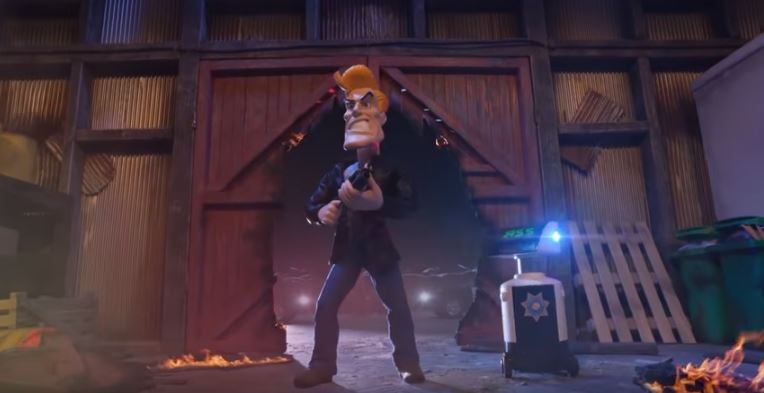
In todays Narrative craft session we watched a film entitled 'Chuck Steel - Raging Balls of Steel Justice'. This animation shows good examples of the different camera angles that can be used in an animation, for example,

A Low Angle Shot - used to show a characters superiority:

A Voyer Shot - View of a character e.g. looking down the sight of a gun:

and a Tilt Shot - Used to show the animations scene:


One of the main rules from todays session is called the 180˚ rule:


This is the rule that when filming, the camera angles cannot cross the line of vision. A good example is that at the theatre you can only watch from one point of view as we can't move to the back of the stage and watch it from that side (facing the crowd). The same rules go for animation camera angles.


Wednesday, 9 January 2019

Learning how to draw Story Beats using Post - It Notes - Cooking a Fried Egg

Story beats are drawings of the main scenes in a film, used to give the viewer a good idea of what to expect in them by telling the story in simple steps.

Here are my first attempts at drawing story beats from todays session of 'Creative Making'. I had to draw the beats for the steps in making a fried egg:

(The top post-it note in each image shows my original thoughts. The second post-it notes were drawn, thinking about camera angles and the final post-it notes were drawn, as if they were scenes from an action movie).


I edited my final action drawing in order to try and really bring it to life:


Additionally today, I was introduced to the 5 C's of Cinematography:

Camera Angles
Continuity
Cutting
Close Ups and
Composition

Cinematography is key to all films and involves actually shooting them.

Tuesday, 8 January 2019

Guest Lecture by Tim Searle

Tim Searle is the Head of Animation at Beano Studios - London. He has worked on/directed animations such as the 'Title sequence to Have I Got News for You', 'Danger Mouse', 'Mr Bean the animated series' and more recently 'Dennis the Menace' and his most recent animation with puppets is the 'Title sequence to the series Man Down', just to name a few.


A key quote that Searle shared with us was by John Halas - "‘Animation is the most contemporary
form of human expression combining the elements of motion, story-telling, sound and space".

Additionally in the Spring of 1989, Searle set up his own animation business, called 'Triffic Films', a name he chose as he "wanted a name that bank managers found hard to say". I discovered this newspaper article, written when Searle had just started 'Triffic Films':


Searles top tip was to 'sharpen up storyboard skills' as it is a key skill that is always needed for any animation. He finished his talk with a quote from T.S. Eliot - "If I had longer, I'd have written a shorter letter". Searle used this quote in reference to creating an animation showreel because it has to show off  your work to potential employers. In particular it has to show your best work in the shortest time possible as employers don't have time or interest in watching long showreels.

I found this talk very useful as it gave an insight into what animation is like in industry.


Monday, 7 January 2019

Narrative Film Screening 2

The short film we watched today was the first episode of the Road Runner and the Wile E. Coyote entitled 'Fast and Furry-ous'. This animation is great in showing that dialogue is not necessarily needed for amazing animations. As well as this we were taught that it is good to think of the environment as the third character because the characters and the environments they are in are just as important as each other. Finally it is key to note that characters have to stick to the rules of the world they are in, for example 'All action must be confined to the natural environment of the two characters - The Southwest American Desert'.


Additionally we watched a 2D film called 'Belleville Rendezvous', in which a cyclist was kidnapped from the Tour de France, by a Paris Mob Boss. He forced the cyclists to cycle on bikes that were connected to a machine with cardboard cyclists riding up a mountain. The mob bosses would then bet on who they thought would win the race. What the Mob Boss did not count on was that the cyclists Mother would find him and come to the rescue. 

Overall the music in this animation is quite catchy and the film uses vintage colours throughout, switching from sepia to then brighter colours: